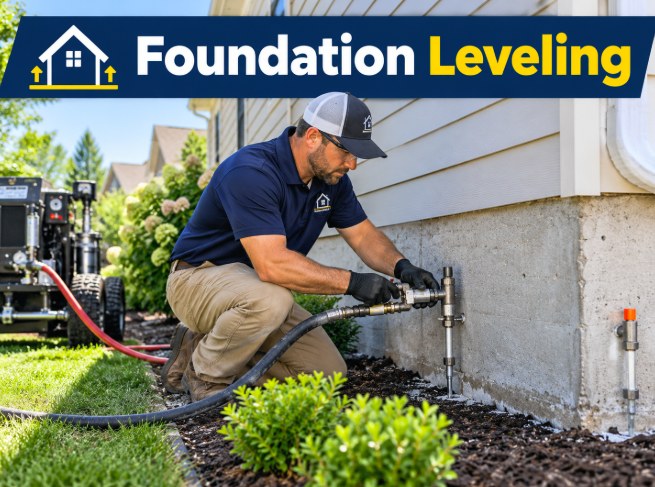
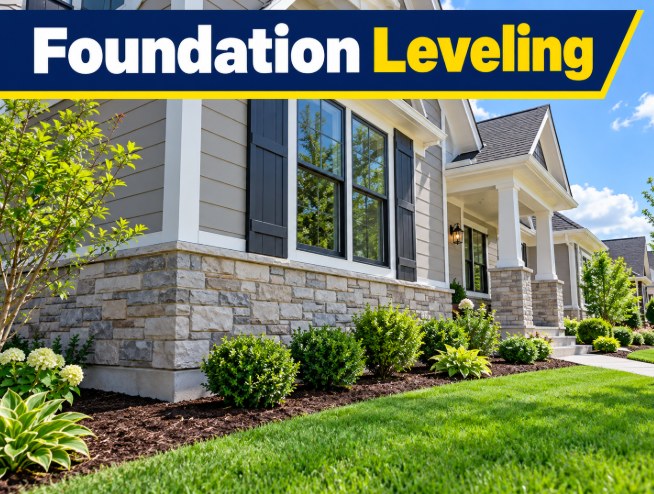
A building foundation supports walls, floors, roofing, doors, windows, and many other parts of the structure. When movement occurs, the effects can appear throughout the property.
Long Beach Concrete Leveling provides foundation-related leveling evaluations for properties in Long Beach, with the understanding that structural foundation conditions may require specialized engineering or foundation repair solutions depending on the cause and severity.
Foundation work should never be treated exactly like leveling a sidewalk or patio.
Signs That May Indicate Foundation Movement
Possible warning signs can include:
- Cracks in walls
- Cracks in exterior masonry
- Uneven interior floors
- Doors that begin sticking
- Windows that no longer operate normally
- Separation around trim
- Gaps between walls and floors
- Visible foundation cracks
- Changes around garage openings
- Sloped interior surfaces
- New cracks near doorways
- Separation between adjoining building components
These symptoms do not automatically prove that a foundation has settled.
Many conditions can cause similar signs, which is why proper evaluation is important.
What Causes Foundation Settlement?
A foundation transfers the weight of a structure into the soil beneath it.
When the supporting ground changes unevenly, sections of the foundation may move.
Potential contributing factors include:
Soil Settlement
Fill material beneath or around a structure can compact over time.
Moisture Changes
Repeated wet and dry cycles may cause some soils to expand and contract.
Drainage Problems
Water concentrated near one section of a foundation can alter soil conditions.
Erosion
Water movement can remove supporting soil from certain areas.
Plumbing Leaks
Leaks beneath or close to a building may saturate the soil and affect support.
Construction Conditions
Original soil preparation, footing design, and site grading can influence long-term performance.
Foundation Leveling Requires Careful Diagnosis
The visible symptom may not identify the actual problem.
For example, a cracked wall may be related to:
- Foundation movement
- Normal material shrinkage
- Framing movement
- Thermal expansion
- Moisture conditions
- Previous repairs
For that reason, foundation leveling begins with understanding the pattern of movement rather than simply reacting to one crack.
Slab Foundation Leveling
Many Southern California properties use concrete slab foundations.
If sections of the slab or supporting foundation move, interior floors may become uneven.
Depending on the construction and underlying cause, different repair methods may be required.
The correct solution depends on factors such as:
- Foundation design
- Soil conditions
- Extent of movement
- Structural loads
- Building configuration
- Location of settlement
Foundation Versus Interior Floor Settlement
A low floor does not always mean the building foundation itself has failed.
Interior slab sections may sometimes settle independently from structural footings.
Distinguishing between structural and nonstructural movement is important because the repair approach can be very different.
Drainage Around Foundations
Water management plays a major role around buildings.
Improper drainage may direct water toward the foundation instead of away from it.
Potential contributors include:
- Downspout discharge
- Irrigation
- Low exterior grading
- Patio settlement
- Driveway settlement
- Broken drains
- Plumbing leaks
Correcting foundation-related issues may therefore involve more than raising concrete.
Structural Evaluation
Some foundation conditions should be reviewed by a licensed structural engineer or qualified foundation specialist.
This is particularly important when there are signs of significant structural movement.
Engineering evaluation may be appropriate when there is:
- Major foundation cracking
- Significant interior floor slope
- Large wall separation
- Repeated movement after prior repairs
- Structural damage
- Unclear building movement
Why Foundation Problems Should Not Be Ignored
Structural movement can affect numerous parts of a building.
As elevations change, stress may transfer into:
- Drywall
- Doors
- Windows
- Flooring
- Tile
- Cabinets
- Framing
- Plumbing
- Exterior finishes
Understanding the cause early may help property owners make more informed repair decisions.
Foundation Leveling Solutions
There is no single foundation leveling method suitable for every building.
Depending on the actual condition, solutions may involve specialized support systems, structural repairs, slab correction, drainage improvements, or other techniques.
The purpose of the evaluation is to determine what type of problem exists before selecting a repair method.
Residential Foundation Concerns
Homeowners may request foundation evaluation after noticing:
- New cracks
- Sloping floors
- Sticking doors
- Separation near ceilings
- Uneven garage areas
- Exterior concrete movement
These signs should be considered together rather than separately.
Foundation Conditions at Commercial Properties
Commercial buildings can also experience settlement.
Different loads, larger slab areas, utility trenches, and site conditions can create more complex movement patterns.
Evaluation may include:
- Floor elevations
- Exterior concrete
- Wall cracking
- Door operation
- Drainage
- Parking areas
- Building additions
A Responsible Approach to Foundation Leveling
Foundation work requires careful judgment.
At Long Beach Concrete Leveling, we focus on identifying the type of movement present and determining whether the problem falls within concrete leveling work or requires a structural foundation specialist.
The goal is to help property owners pursue the appropriate repair rather than apply a one-size-fits-all solution.